

AI, IoT, and smart automation are entering factories faster than ever. But none of them work well without a strong ERP core. Businesses also need systems that allow information to flow between departments and keep data accurate.
The shift towards smart manufacturing is clear. Research shows that 92% of surveyed manufacturers believe smart manufacturing will be the main driver of competitiveness over the next three years. This highlights the growing importance of connected systems and better use of data in manufacturing.
So the big question is how to set it up: hire ERP implementation experts, or run the rollout with your team? At TuvisTech, a Zoho Premium Implementation Partner, we have completed 400+ implementations, so we know what works and what does not.
Let’s explore both options and see which one suits manufacturers best.
Why ERP Matters for Manufacturers Today
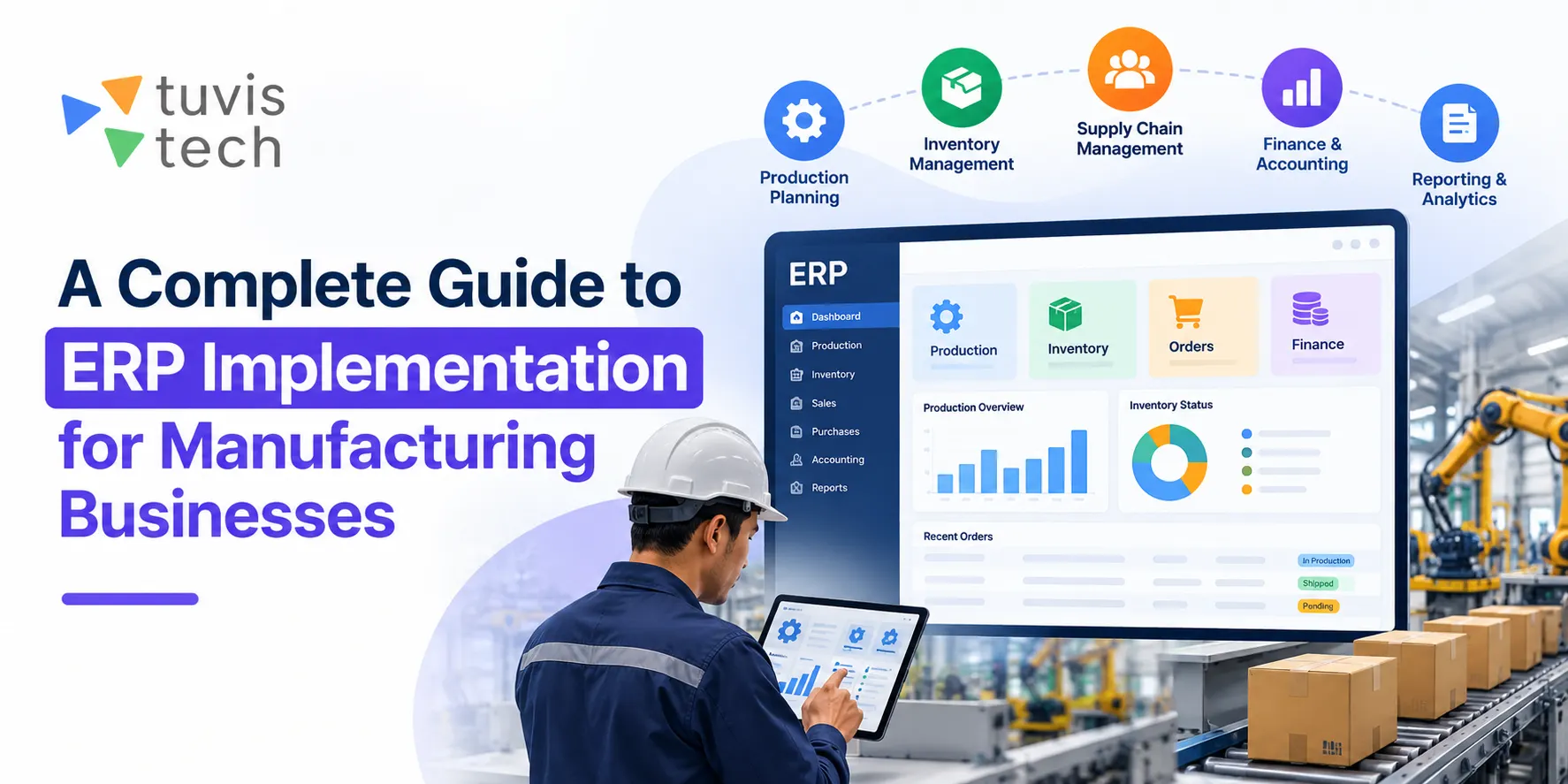
A factory has many teams: sales, stores, production, purchase, and accounts. When each team uses its own spreadsheets or software, mistakes and delays follow. ERP puts everything in one system, so everyone sees the same, latest data. With the right ERP implementation services, you set up the system to match how your factory actually works, not the other way around. Here is what ERP does for your business:- When everyone sees the same numbers, there are fewer mistakes to fix.
- You always know what is in stock, so no shortages and no extra stock lying around.
- Orders, materials, and machines are linked, so planning is easier.
- You know the real cost of each product and can price it right.
- GST records and invoices stay in one place, so audits take less time.
- AI and smart machines need connected data, and ERP provides it.
ERP Implementation Services: What You Get
Buying ERP software is the easy part. Making it work in your factory takes more effort. Good ERP implementation services cover the whole journey, from understanding how you work to helping your team use the system every day. Here is what you get.1. Business study and planning:
Before anything is set up, the team sits with you to understand how your work runs today. They look at how orders come in, how stock moves, how purchasing is done, and how billing happens. This helps them spot delays and gaps early. A good ERP implementation partner plans around your real needs, not a ready-made template.2. Custom setup:
Once the plan is clear, the system is set up to match your way of working. This is where Zoho for manufacturing works well, because it can be adjusted to fit your process. You can expect:- Fields and forms that match your products and orders
- Approval steps that follow your own rules
- Reports that show the numbers you actually check
3. Safe data migration:
Your old data lives in Tally, Excel sheets, or another system. Moving it is a big job, and small errors can cause big trouble later. The team cleans the data first, removes repeats, and checks it after the move. A skilled Zoho consulting partner makes sure nothing is lost, so you can start fresh without worry.4. Integration with your tools:
Your ERP should not work alone. It can be linked with the tools your team already uses, so no one types the same thing twice. For example:- CRM, so sales and production stay in step
- Accounts and GST tools, so billing is quick and correct
- WhatsApp and email, so updates reach customers on time
5. Testing before go-live:
Before the system goes live, it is tested with real cases from your factory, like a sample order, a stock entry, and an invoice. Any problem is fixed while the stakes are low. This also helps keep the ERP rollout costs manufacturers plan for under control, because errors found after launch usually cost more time and money to fix.6. Team training:
A system is only useful if people use it. Training is planned by role, so each person learns only what they need. It usually includes:- Hands-on sessions for daily users like store and sales staff
- Separate training for admins who manage the system
- Simple guides your team can check later
7. Support after go-live:
The first few weeks after launch are the most important. Your team will have questions, and small issues will come up. With ongoing support, help is a call or message away. Quick fixes keep production running and help your team trust the new system. Good support also means regular check-ins, so the system keeps improving as your business grows.
In-House Rollout: What It Really Involves:
Doing the ERP rollout in-house means your team plans, sets up, tests, and trains everyone, on top of daily work. It may reduce the ERP rollout cost firms expect, but it needs time, skill, and focus. Here is what your team will have to handle:- Choosing the software: Someone must compare options and pick one that fits your factory. For example, they may look at Zoho for manufacturing and check if it suits your process.
- Planning the project: Your team sets goals, dates, and who does what. Without a clear plan, work slows down quickly.
- Setting up the system: Fields, approvals, and reports must be set up by your own staff. This needs ERP knowledge, which many teams learn as they go.
- Moving old data: Data from Tally or Excel must be cleaned and moved with care. One wrong entry can cause trouble later.
- Testing: Your team must check that orders, stock, and billing all work before go-live.
- Training everyone: Each person needs to learn the new system, and your team has to teach them.
- Fixing problems later: After launch, your staff handles all questions and issues. If they get stuck, they may need an ERP implementation partner to step in.
ERP Implementation Services vs. In-House Rollout
Both options can work, but they suit different businesses. Some factories have a strong IT team and time to spare. Others need faster results and expert help. This table shows how ERP implementation services and an in-house rollout compare on the points that matter most.| Factor | ERP Implementation Services | In-House Rollout |
| Cost | Higher fee at the start, but fewer surprise costs later. | Lower fee at the start, but staff time and rework can add up. |
| Speed | Faster, as experts have done this many times. | Slower, as your team learns and works on daily tasks too. |
| Skills needed | Provided by the expert team. | Must come from your own staff. |
| Control | Shared with the partner, but you approve key decisions. | Full control with your own team. |
| Risk of mistakes | Lower, as the process is proven. | Higher, especially in data moving and setup. |
| Training | Planned and given by the experts. | Your team has to prepare and teach |
| Support after go-live | Ongoing help from a Zoho consulting partner or similar expert | Depends on your own team’s time and skills |
| Best for | Growing factories that want quick, smooth results | Companies with a skilled IT team and no rush. |
Common Risks and Mistakes to Avoid
When an ERP project fails, people often blame the software. In most cases, the problem starts earlier, with a few small mistakes made at the beginning. Here are the most common ones.1. Starting without clear goals
Many companies begin the project without deciding what they want to fix. The accounts team wants faster billing, the stores team wants correct stock, and the management wants better reports. Each team expects something different, and the project loses direction. Write down your main goals before you start. For example:- Send invoices on the same day
- Know the exact stock at any time
- Avoid entering the same data twice
2. Moving unclean data
Old data often has repeated names, missing GST numbers, and items that are no longer in use. If you move all of it as it is, the same problems will appear in the new system. Clean the data before the move and check it again after. Good ERP implementation services include this step, because wrong data leads to wrong reports from the first day.3. Doing too much at once
Some companies want every feature to go live on the first day. This is hard for the team, as they still have daily orders to complete. Start with the main work and add the rest later. A good first phase usually includes:- Sales orders
- Stock and purchase
- Billing
4. Not giving proper training
A short demo is not enough. If the team finds the system hard to use, they will go back to Excel and paper, and the money spent on the ERP is wasted. Train each person on the work they do every day. Give extra support in the first few weeks, as most questions come up during this time.5. Looking only at the software price
The quote is not the full cost. Staff time, delays, fixes, and extra training also add to the budget. So the real ERP rollout cost for companies to pay is often higher than the first estimate. Make a full budget before you begin, and keep some amount aside for changes.6. Choosing the wrong help:
Your project can slow down if the people guiding it do not understand factories. Look for an ERP implementation partner who has worked with manufacturers, and ask to see past projects. A good Zoho consulting partner will also tell you honestly what your business needs and what it does not. Watch out for these warning signs:- No one owns the project from your side
- The plan has no dates or clear steps
- Users are not asked for their input
- Testing is skipped to save time
Which Option Fits Your Business?
There is no single right answer. The best choice depends on your team, your time, and how fast you need results. Check which row below sounds most like your business.| Your Situation | Better Fit |
| Nobody on the team has worked on an ERP before. | ERP implementation services |
| A skilled IT team is in place and has free time. | In-house rollout |
| Go-live is needed within a few weeks | ERP implementation services |
| No fixed deadline, so the project can go slowly | In-house rollout |
| Many plants, products, or complex processes | ERP implementation services |
| A small setup with simple, easy processes | In-house rollout |